
Chiropractic Adjustments in Roswell, GA
Three ways to adjust, one guiding rule: use the gentlest approach that gets your nervous system to respond.
Gentle, instrument-based, and built around the nervous system
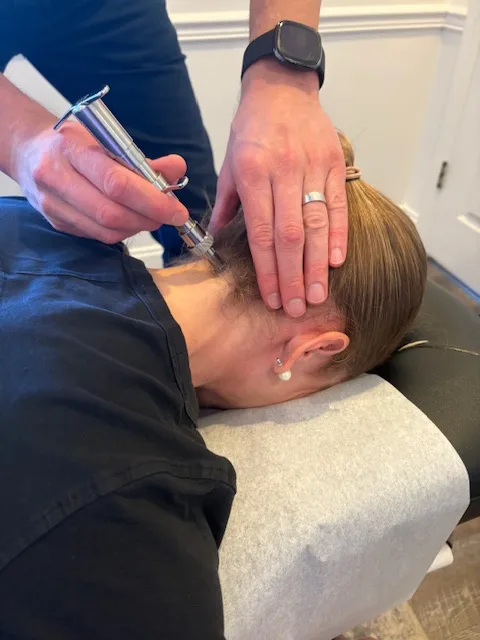
Torque Release Technique (TRT) is a low-force adjusting method delivered with a precise handheld instrument called an Integrator. Instead of twisting the spine and pushing until something pops, the Integrator delivers a light, targeted impulse exactly where your nervous system needs it.
TRT is what practitioners call a neuro-tonal technique. The idea: your spine's alignment reflects the tension your nervous system carries. Release the tension pattern and the structure follows, often with far less force than traditional adjusting.
What a TRT visit feels like
- You stay comfortable, often face down, no bracing or twisting positions
- A short assessment finds where tension is being held that day
- The Integrator delivers quick, light impulses, about the pressure of a firm tap
- Re-assessment confirms your body actually responded before you leave
Because it is so gentle, TRT fits people who avoid chiropractic care out of fear of cracking, patients recovering from injury, older adults, and anyone who simply prefers a lighter touch.
Manual and extremity adjusting
TRT leads, but it is not the only tool. Some findings, and some patients, call for hands-on care.
Traditional, hands-on spinal care
Classic manual adjusting for patients who prefer it or whose examination calls for it. Dr. Donnelly will always explain what he found and what he recommends, and the choice of approach stays yours.
Beyond the spine
Shoulders, elbows, wrists, hips, knees, ankles, and feet can all lose normal joint motion. Extremity adjusting restores it, which matters for athletes, active adults, and anyone whose pain does not start in the back.
More on manual & extremity adjusting →Adjusting, answered
Does Torque Release Technique hurt?
No. The Integrator's impulse feels like a quick, light tap. Most patients find visits comfortable, and many find them relaxing.
Will I hear cracking or popping?
Not with TRT. The instrument works at low force, well below the threshold that produces the popping sound of traditional adjusting. If your care plan includes manual adjusting, Dr. Donnelly will walk you through exactly what to expect first.
Is instrument adjusting right for children or older adults?
TRT's low force makes it a fit for a wide range of ages and comfort levels. Every patient is assessed individually before any care begins.
How is this different from other chiropractors?
Two things: the technique and the training. TRT assesses the nervous system before and after every adjustment, and Dr. Donnelly holds the technique's Advanced Proficiency Certification.
Curious whether gentle adjusting can help?
Ask. A short conversation is the best way to find out whether this approach fits what you are dealing with.