Manual and Extremity Adjusting in Roswell, GA
Torque Release leads at this practice, but trained hands still matter, on the spine and far beyond it.
Hands-on care, where it earns its place
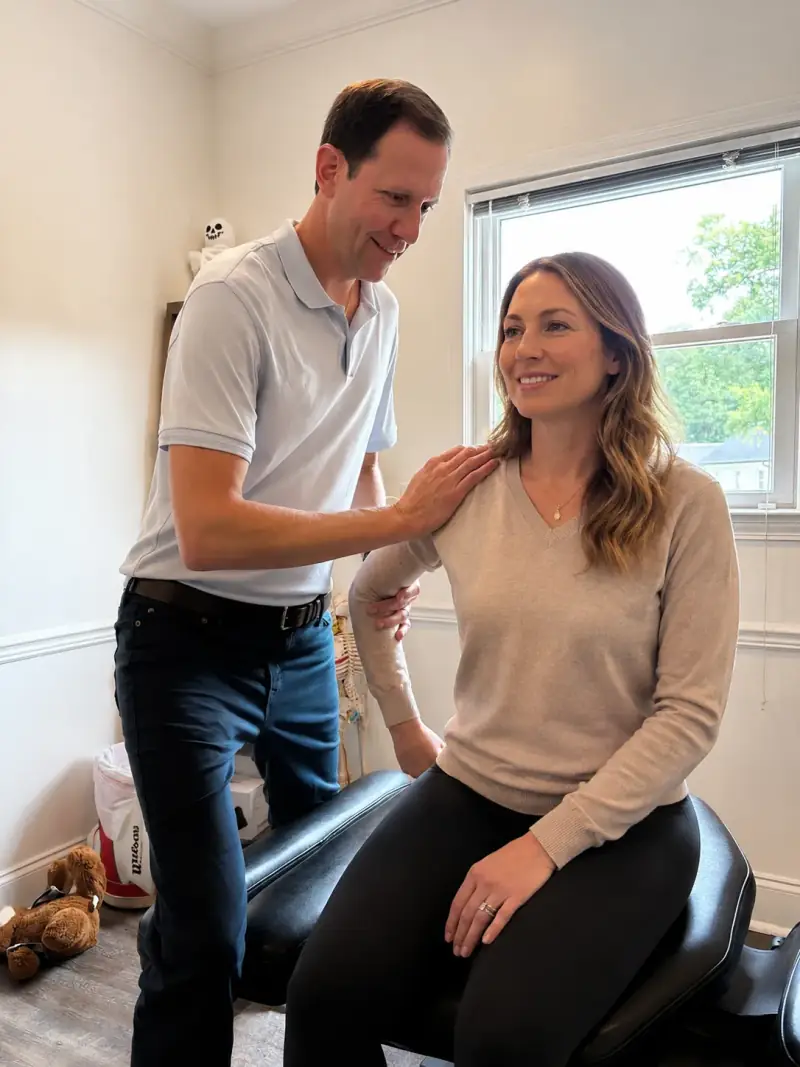
Some findings respond best to traditional manual adjusting, and some patients simply prefer the hands-on approach they know. Both are respected here. Manual spinal adjusting is delivered with care and full explanation, and the choice between instrument and hands stays yours after the findings are discussed.
Extremity adjusting extends that skill beyond the spine. Shoulders, elbows, wrists, hips, knees, ankles, and feet all depend on precise joint glide, and they lose it: after sprains, with repetitive work, or alongside spinal problems that changed how you move. Restoring that glide is detailed, satisfying work, and it is a core part of this practice rather than a sideline.
Where extremity work shines
- Ankles that never felt right after an old sprain
- Wrists and elbows worn by repetitive work or sport
- Hips and knees that feel blocked rather than simply sore
- Feet whose mechanics are quietly feeding knee, hip, or back pain
Hands-on care, answered
Will manual adjusting hurt?
It should not. Manual adjusting is quick and specific, and nothing is done without explanation first. If a finding suggests manual work is not right for you that day, it is not used.
What is that popping sound?
Gas releasing from the joint fluid as the joint gaps slightly: the same physics as knuckle cracking, and not bones grinding. With instrument adjusting there is no pop at all.
Can you adjust ankles and wrists, really?
Really. Every synovial joint depends on precise glide, and the small joints of the hands and feet respond noticeably when that glide is restored.
Joints move. Yours should.
Spine to fingertips, get the joints examined by someone trained to restore their motion. Call or send a message.