
Herniated Disc Treatment in Roswell, GA
A disc diagnosis is not automatically a surgery conversation. For many people it is a decompression conversation.
What a disc injury actually is
Spinal discs are the fluid-filled cushions between your vertebrae. When the outer wall weakens, the inner material can bulge or push through, pressing on nearby nerves. That pressure is what produces the classic symptoms: localized spine pain, and pain, numbness, or weakness radiating into an arm or leg.
Discs heal slowly because they sit under constant load and have limited blood supply. Care that periodically unloads the disc, improves the mechanics around it, and calms the irritated nerve gives that slow healing a real chance.
The conservative path we use
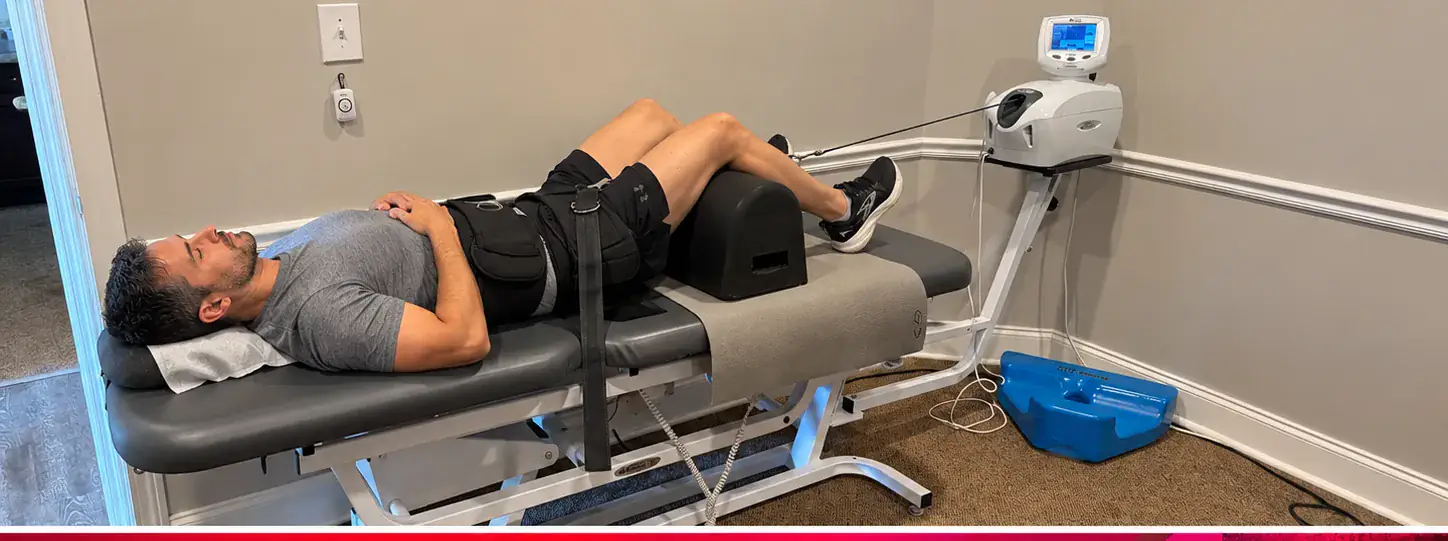
- Spinal decompression: computer-controlled unloading cycles targeted to the injured level
- Gentle Torque Release adjusting around the injury, never forcing an inflamed segment
- Progress checkpoints, so "is this working?" gets answered with findings rather than hope
- A plain referral if your case truly belongs with a surgeon: some do, and pretending otherwise wastes your time
Disc injuries, answered
My MRI shows a herniation. Do I need surgery?
Not necessarily. Imaging findings and symptoms do not always match, and many disc injuries improve with conservative care. The honest answer comes from pairing your imaging with a careful examination.
Is it safe to adjust a spine with a disc injury?
With low-force instrument adjusting and a plan built around your findings, yes, for appropriate cases. Segments that should not be adjusted are not adjusted; that is what the examination is for.
How long does a disc take to heal?
Longer than anyone wants: typically months, not days. What care changes is whether those months trend toward healing or toward a chronic problem.
Get a second look before the OR.
Bring your imaging and your questions. You will leave with a clear picture of your conservative options.